Keeping a Token Set Organized at the Table
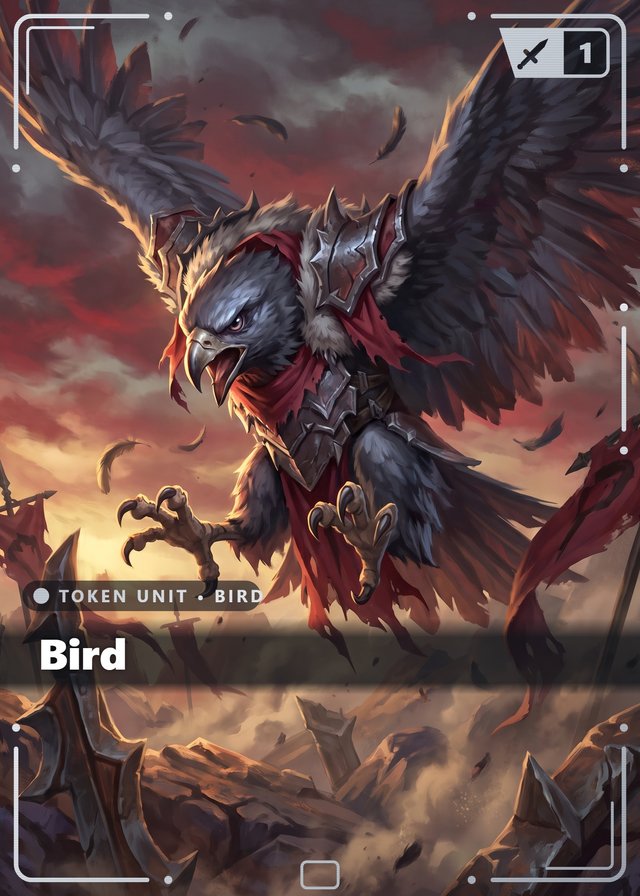
A token you cannot find fast is a token that slows the game down. Most players solve this by dumping everything in the deck box and digging through it when something resolves, which works right up until the turn it matters.
This guide covers three things: where tokens should sit during a game, how to sort them once you own more than one set, and what to bring when you leave the house.
During a game: keep them off the deck box
The habit worth building is putting your tokens somewhere with their own footprint before the first turn, not pulling them out mid-resolution.
A few placements that work:
- Face up beside your play area. The simplest option. Every token in the set is visible, so you are picking one up rather than searching. This is the reason our art is built as a matched set: at a glance across the table, the family reads as one look.
- Stacked by Might. If your deck makes several unit types, stacking them in Might order means the one you want is a known depth into the pile rather than a hunt.
- In the tray, lid open. Complete metal sets ship in a fitted foam tray inside the gift box. The tray holds each card in its own slot, which is both storage and a serving dish. Open it, set it beside you, and put tokens back as they leave the battlefield.
The one placement to avoid is on top of the deck or inside the sleeve stack. Tokens are not deck cards, and a metal plate at about 0.5 mm is thick enough that it will shift a stack it is buried in.
Sorting a collection across decks
Once you own tokens for more than one deck, the question changes from "where do I put these" to "which ones do I bring".
Two sorting schemes hold up:
By deck. One pouch or tray per deck, containing exactly the tokens that deck makes. Grab the deck, grab the matching tokens, done. This is the least thinking at the table and the most duplication in the collection, since a Recruit that two decks both need has to exist twice or move between pouches.
By token type. All Recruits together, all Mechs together, and so on. Nothing is duplicated, and building a token loadout for a new deck is a matter of pulling one of each. The cost is that you assemble the loadout before every session rather than grabbing a finished one.
Deck-based sorting suits players with two or three fixed decks. Type-based sorting suits players who rebuild often. Neither is better; they fail in different places.
If you are sorting by type, our card stock tokens ship five to a pack per token type, which lines up with type-based storage without any rearranging.
Colors are the shortcut
Every token type in the game is made by decks running particular colors, and that is the fastest filter for deciding what a deck actually needs. A Recruit shows up in Yellow and Blue decks. A Mech shows up in Red, Blue, and Orange. A Sand Soldier is a Green token.
Our sets are built along the same lines: each one covers the tokens a specific color pair puts on the battlefield, which is why the Iron Legion set is a Red and Yellow set and the Void Huntress set is Red and Blue. If you are matching tokens to a deck, start from the deck's colors and the list gets short quickly.
Each set page lists exactly which tokens it includes, so you can check against your deck before ordering.
Travelling to an event
Three things change when tokens leave the table:
- Weight adds up. A steel token runs about 25 g and a brass finish token about 28 g. A four-token set is around 100 g, which is nothing on its own and noticeable once you are carrying tokens for four decks.
- Loose metal in a dice bag scuffs. This is the one scenario that genuinely marks a plate. Dice are harder than you think. Keep tokens in the tray, a slot, or a sleeve if they are sharing a bag with dice.
- Face to face stacking leaves marks over time. Two polished surfaces pressed together for weeks can print onto each other. For a weekend event this is not a concern; for permanent storage it is, and the tray solves it.
For a one-day event, the minimum kit is the deck, the tokens that deck makes, and something that keeps the metal from riding loose against dice.
Card stock as the travel copy
Some players keep a metal set at home and card stock copies in the event bag. The card stock tokens are printed on genuine bulk commons bought at retail, so they sleeve, bend, and survive a backpack exactly like the rest of your collection, and replacing one costs a fraction of replacing a plate.
This is also the cheapest way to test a token loadout before committing to metal for it. Card stock five-packs run $19 per token type, steel tokens are $14, and brass finish tokens are $19. Complete sets take 18 percent off the individual prices.
The metal vs card stock guide goes deeper on choosing between them, and the care guide covers cleaning and long-term storage.
The short version
Give tokens their own space before the game starts, sort by deck if your decks are stable and by type if they are not, use deck colors to decide what a loadout needs, and keep metal away from loose dice in transit. Everything else is preference.